
Macular Degeneration

Macular degeneration, also known as age-related macular degeneration (AMD), is a leading cause of vision loss in the developed world, affecting more than 10 million Americans. The macula is the most sensitive part of the retina and is responsible for sharp, central vision, allowing us to see fine detail clearly. It most commonly occurs in people over age 60, but it can develop earlier in some cases. AMD is a painless condition that typically affects both eyes and causes loss of central vision while leaving peripheral vision intact.
Types of AMD
Dry AMD is the most common form and develops gradually as macular cells break down over time. In some cases, dry AMD can progress to wet AMD, so any sudden changes in vision should be evaluated promptly by an eye doctor.
Wet AMD occurs when abnormal blood vessels grow under the macula and leak fluid or blood, leading to scarring and rapid central vision loss. It can develop quickly and requires urgent specialist care, as early treatment can help slow vision loss.
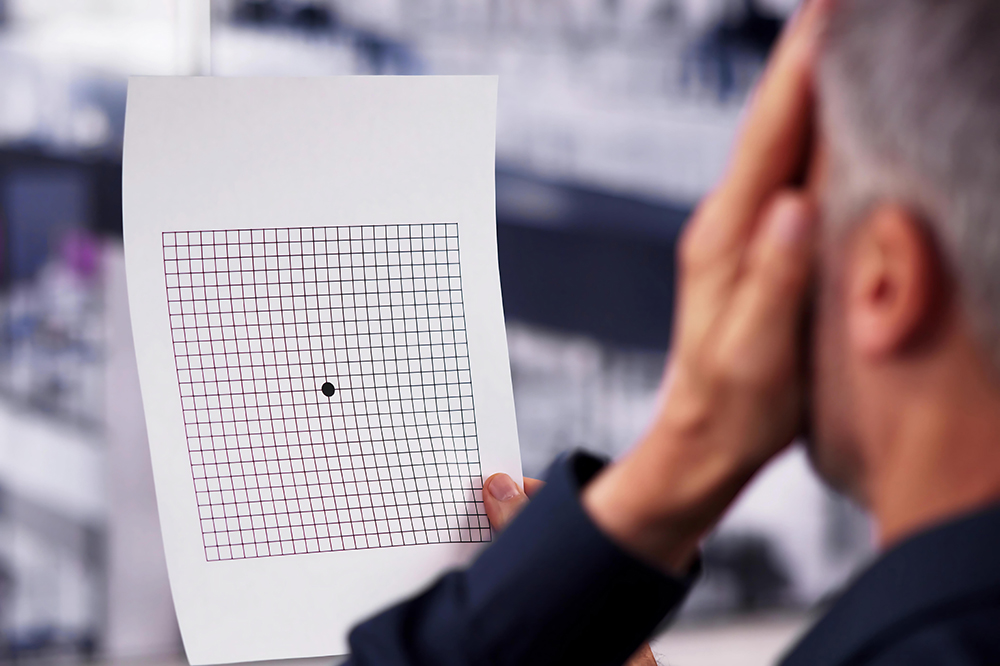
Macular degeneration can affect people differently and may develop slowly, making early changes hard to notice. As the condition progresses, symptoms may include:
Straight lines appearing wavy or distorted
Dark or blank spots in central vision
Blurred or reduced central vision
Faded or less vibrant colors
Difficulty adjusting between light and dark environments
Objects appearing misshapen, smaller, larger, or shifting
Increased sensitivity to bright light
Missing words or letters while reading
If you notice any of these changes, an eye exam can help with early detection and management.
Reducing Your Risk of AMD
There is no single known cause of macular degeneration, but risk is higher for people over 60, people with lighter eyes or those with a family history of the condition.
Experts suggest that the best thing you can do to minimize any potential risk is to ensure that you live a healthy, active lifestyle. You can do this by:
Stopping smoking
Eating a healthy, balanced diet with plenty of fruit and vegetables
Moderating your alcohol consumption
Maintaining a healthy weight
Getting regular exercise
Taking special macular vitamins - MacuHealth
There is also research that suggests that eating leafy, green vegetables can slow the deterioration of vision in cases of dry AMD.
Treatment for AMD
There is currently no cure for age-related macular degeneration (AMD), but treatments can help manage symptoms and slow progression.
For dry AMD, care focuses on helping patients maintain their remaining vision with the above tools and frequently monitoring.
For wet AMD, treatment often involves specialty ophthalmology care with anti-VEGF injections or laser, which help reduce abnormal blood vessel growth and prevent further vision loss.
If you have concerns about AMD, your optometrist can provide guidance and recommend appropriate care.
Quick Links
Helpful Articles
All Eye Care Services
Find personalized eye care excellence with our comprehensive services. From eye exams to advanced diagnostics, trust us for all your vision needs.

Keep In Touch
For non-urgent questions or to learn more about our services, contact us today!
© 2026 Primary Eyecare Associates. All rights Reserved - Accessibility Statement - Privacy Policy - Sitemap
Managed and Designed by 